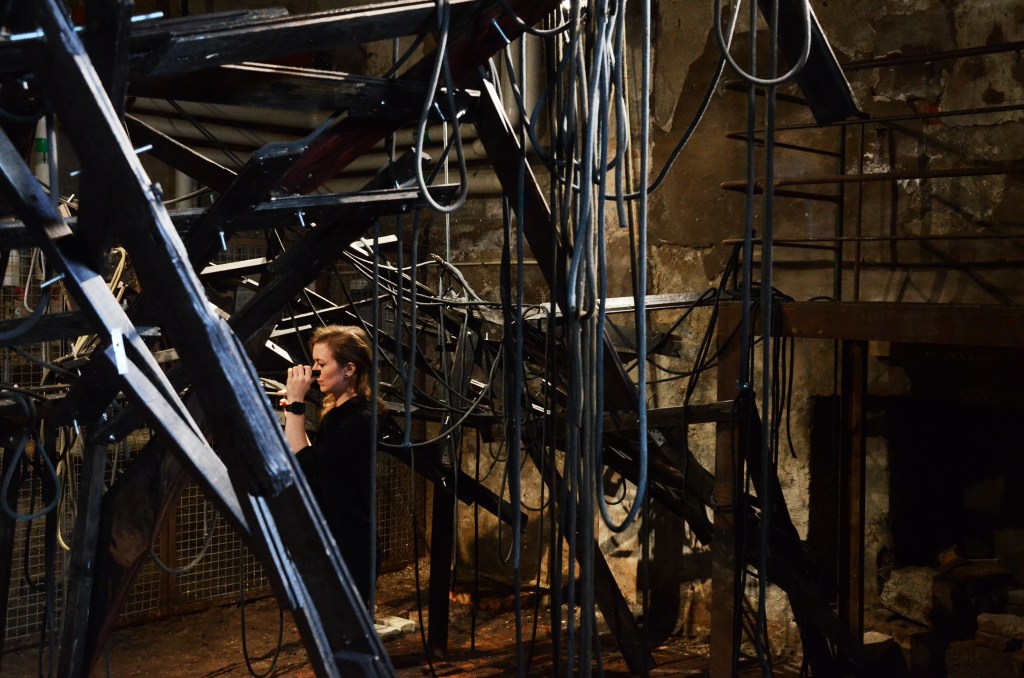
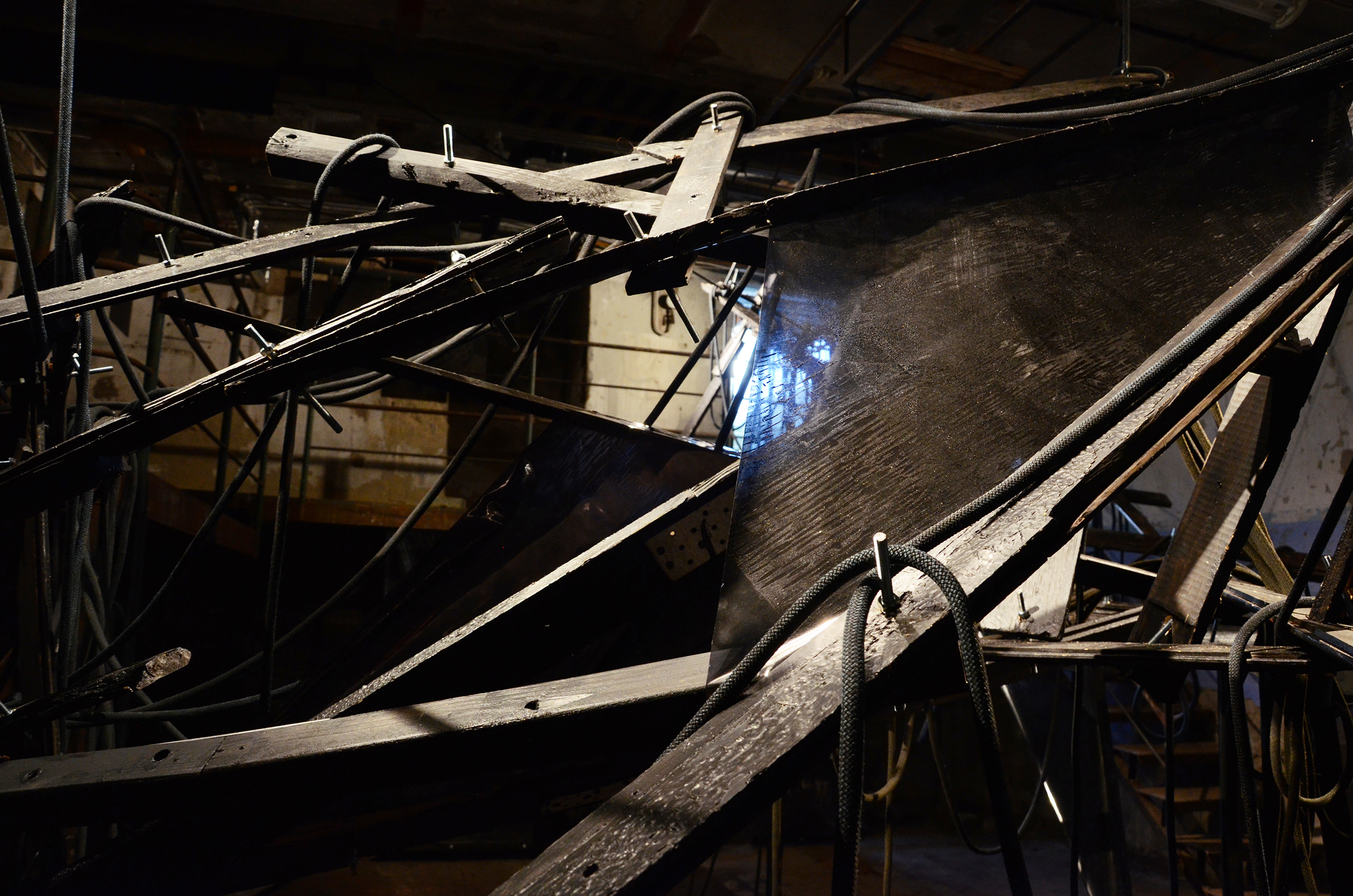
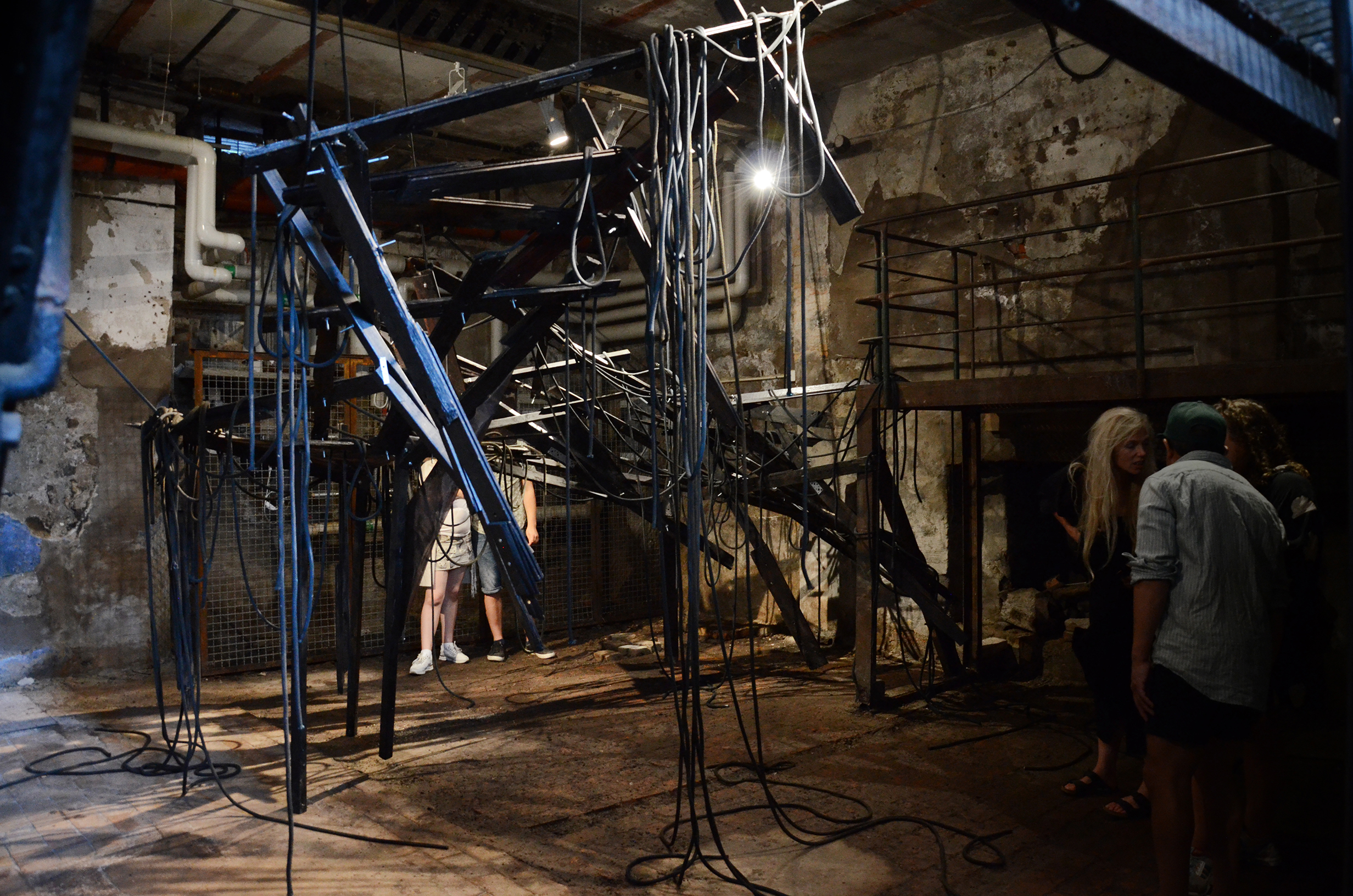
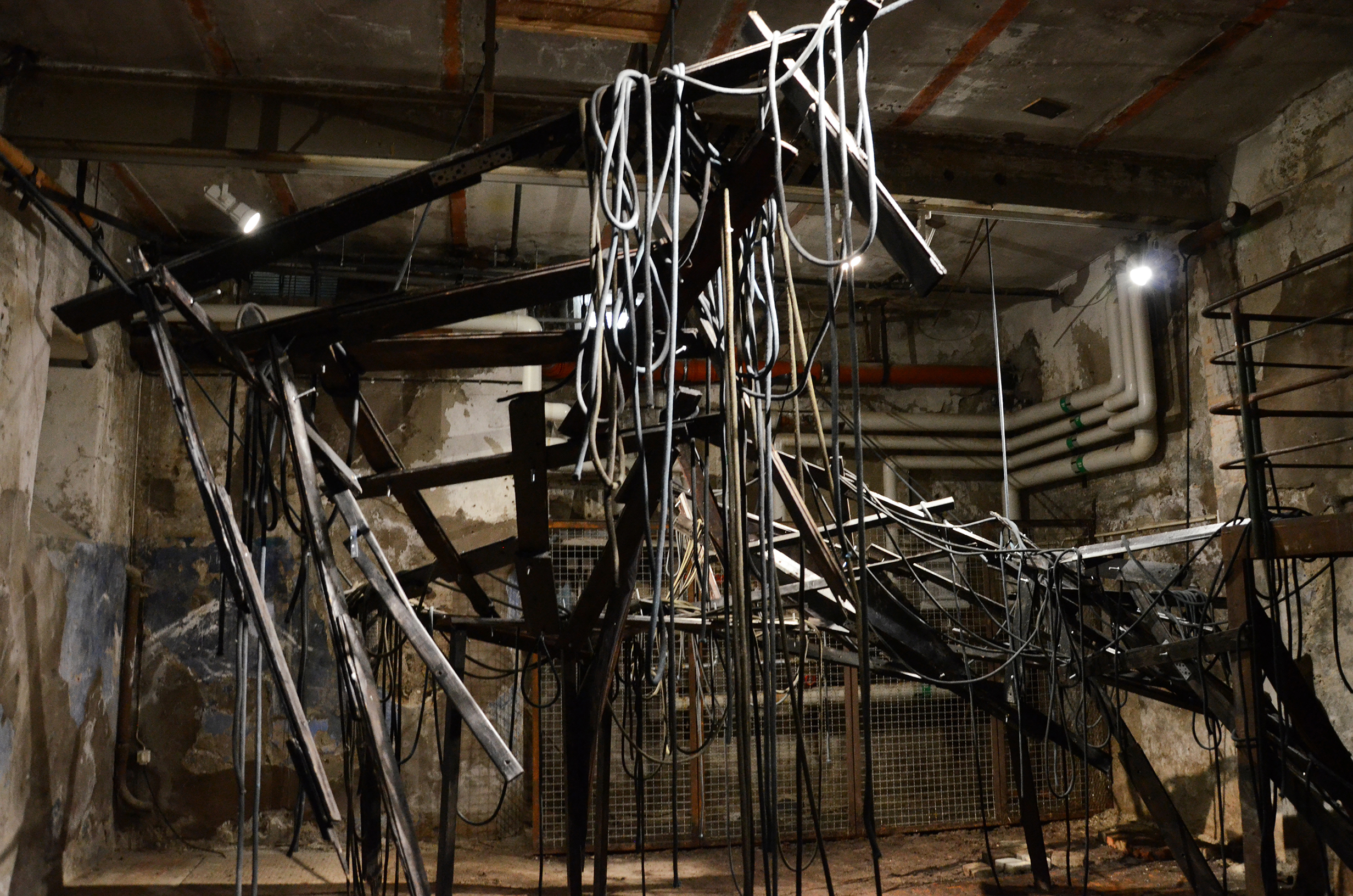
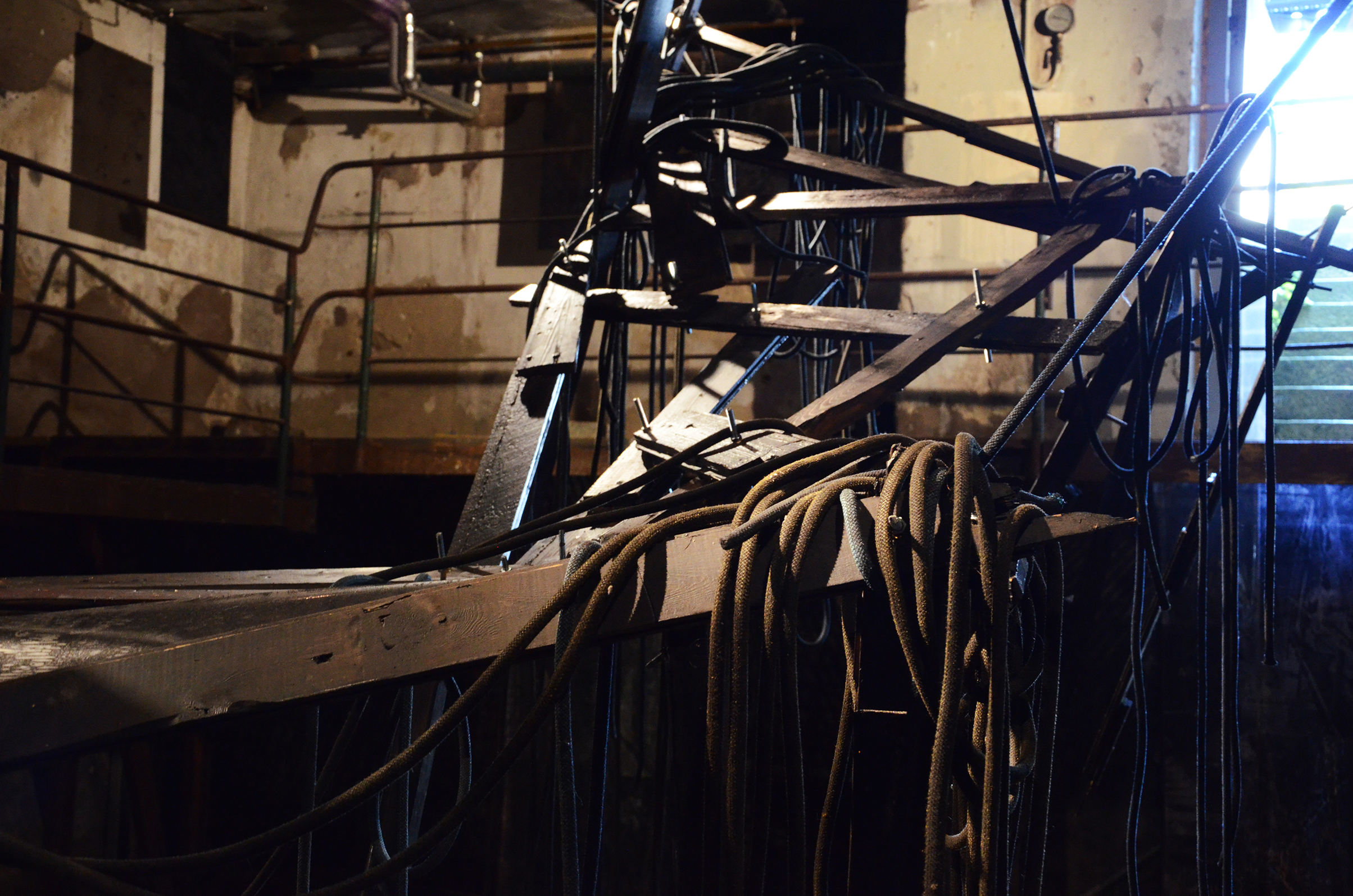
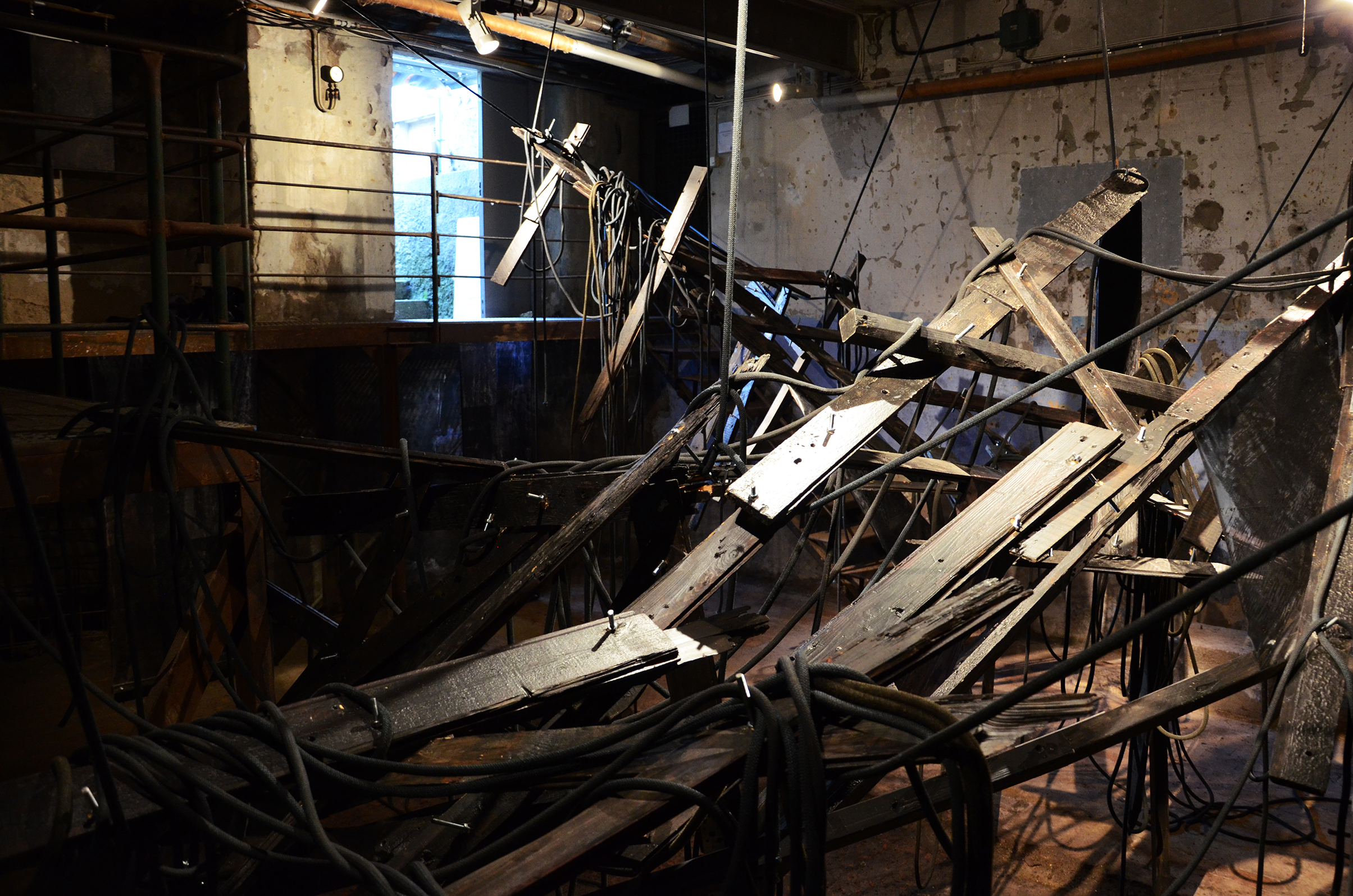
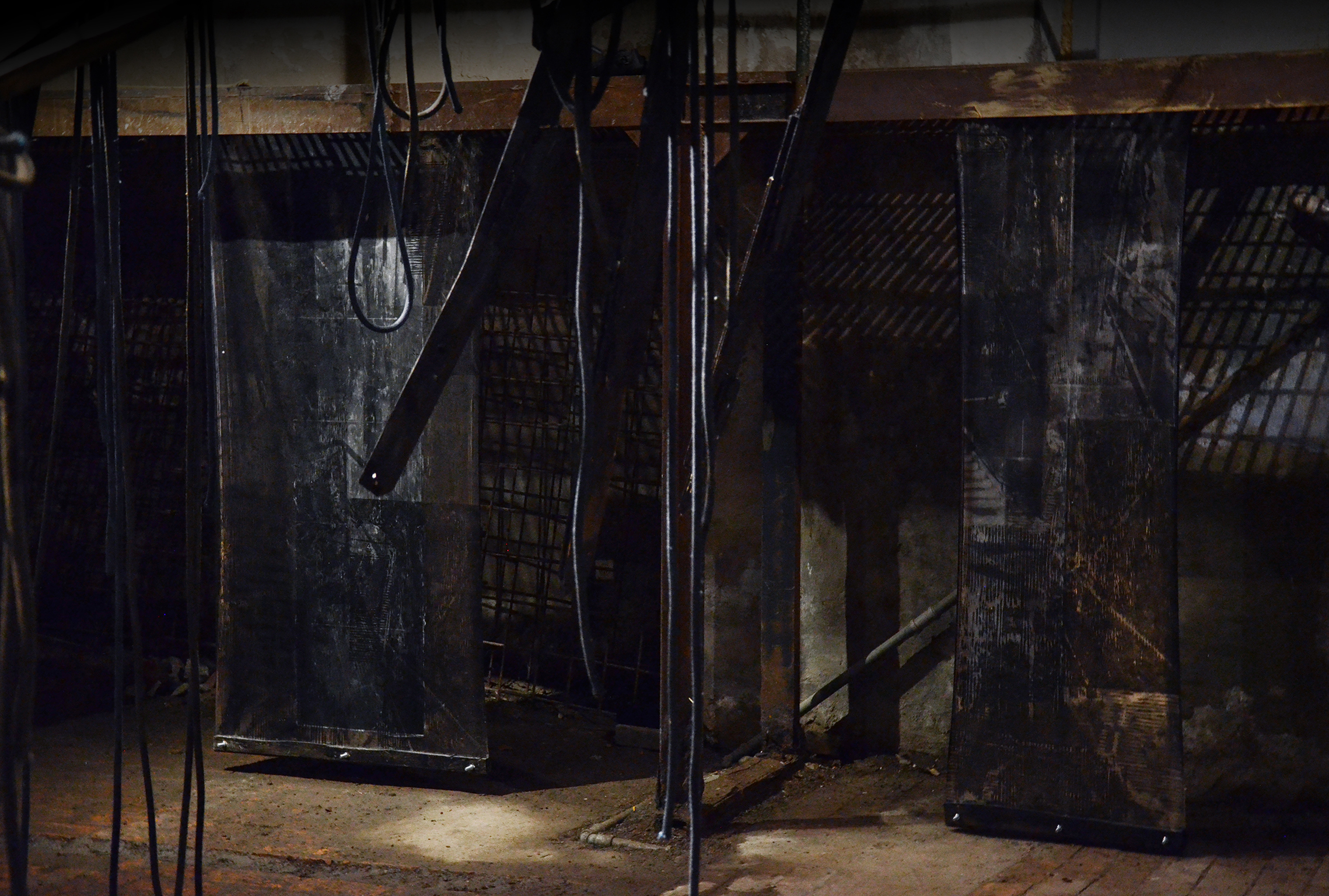
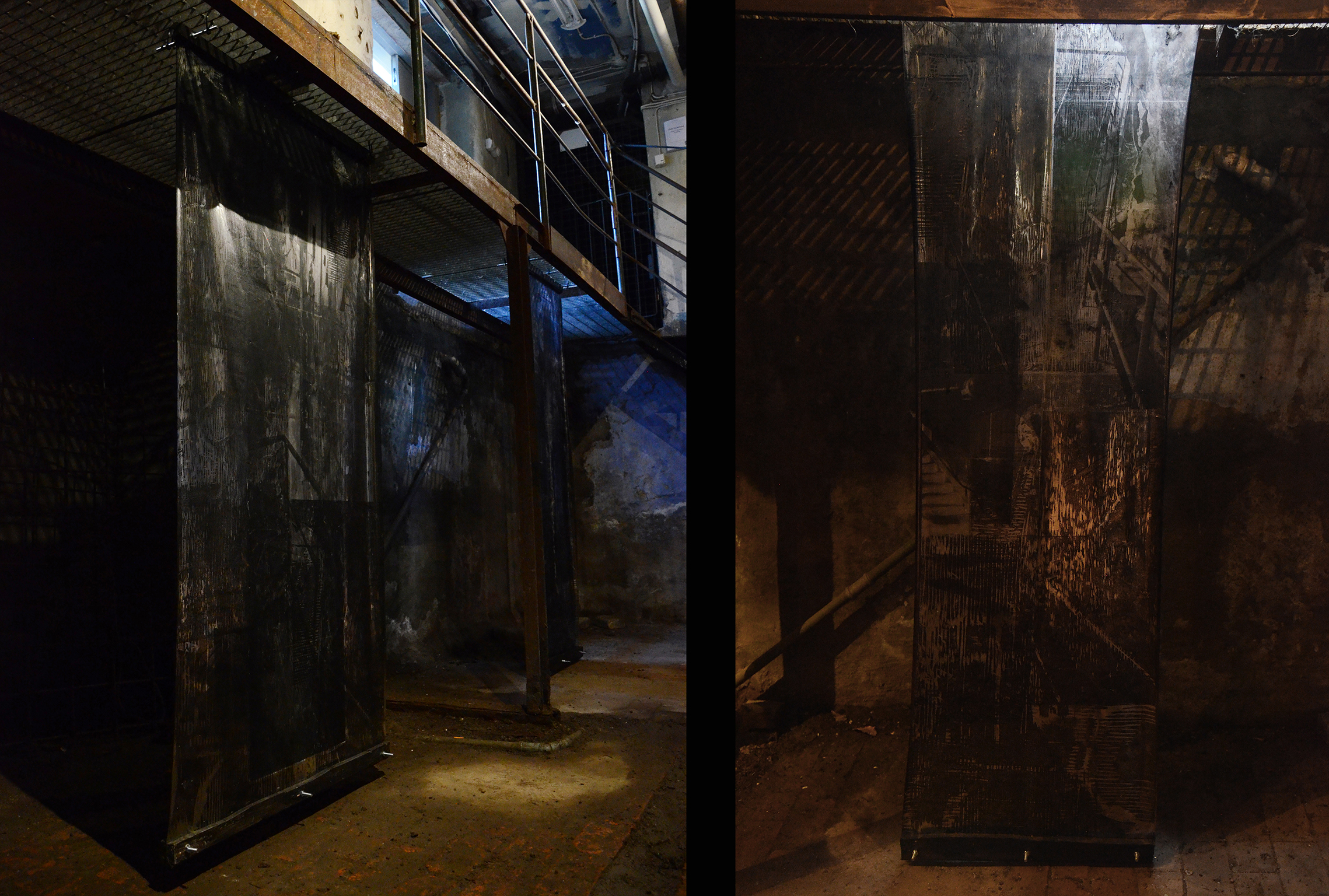
OBSCURE TERRITORIES – Inception was a site-specific installation / solo exhibition at Konstepidemin (Pannrummet) in Gothenburg on view during September 2024. This mixed-media, site-specific installation is inspired by the urban landscape’s hidden elements. This project is a debut exhibition of the artist’s research in underground spaces and bunkers. Through the interaction between form, material and sound the artist explores a correlation between the exhibition venue, its strengths and vulnerabilities and the meaning of a bunker as a metaphor for protection but also a reminder of continuous threat and invader’s presence.
500 Words from Underground…
Underground spaces are ubiquitous and can evoke conflicting interpretations. On one hand, they are hidden from daylight, radiating a dark energy associated with secrecy, danger, and death. On the other hand, basements, tunnels, and metro stations can serve as refuges in times of peril. Being deep underground also provides a space of secrecy, free from satellites and modern technology.
When observing Stockholm’s underground, particularly in places where natural stone surfaces dominate, a resemblance to caves becomes apparent. These natural underground chambers have played an important role in human history, not to mention the significance of the cave in philosophy and the history of Western thought. The metaphor of the cave has influenced countless thinkers and philosophers throughout the centuries and continues to do so today.
Reflecting on caves as spaces in relation to modern urban environments, another comparison arises: with bunkers. A bunker is a fascinating space that also evokes contradictory interpretations. As a reinforced underground shelter, its primary purpose is to protect people during wartime. While it offers a space to hide when needed, providing comfort and safety, it also serves as a reminder of a continuous threat, fear of what is to come, and invisible dangers. Bunkers are built for temporary stays; paradoxically, they are constructed to last indefinitely. These resilient structures can be seen as time capsules, capable of becoming living spaces for an undefined period. The inhabitants of bunkers have minimal contact with the outside world, isolating them from reality. These tomb-like spaces transform the familiarity of the external world into something uncanny, a premonition of something unknown yet sensed. They create a destabilization of familiarity as a spatial experience.
In light of these reflections, this exhibition becomes an experimental interplay where the attributes of the exhibition space, ‘Panrummet,’ are set in relation to bunkers and their metaphorical interpretations. The original purpose of ‘Panrummet’—specifically designed to contain energy or fire and prevent its spread—aligns with the principle of bunkers but also represents the opposite: keeping danger outside the room. The impregnable quality of both spaces, however, is vulnerable to the effects of time.
Using recycled materials such as wooden planks, climbing ropes, and mirrored films, the installation forms a structure that mirrors the size and shape of the exhibition space but with its own energy, dynamically moving in the air. Combined with sound, it can be viewed as a fragment of a bridge, a shelter, a remnant of what has occurred or what may come in the future. The exhibition is created based on the experience of these aforementioned places, absorbing them and using various methods—photography, drawings, and sound recordings—to capture the current reality.
The sound piece was composed of diverse sound fragments recorded at different protective subterranean locations. The recorded material includes sounds of machines, background noises and vibrations, played at the venue during the entire exhibition period.