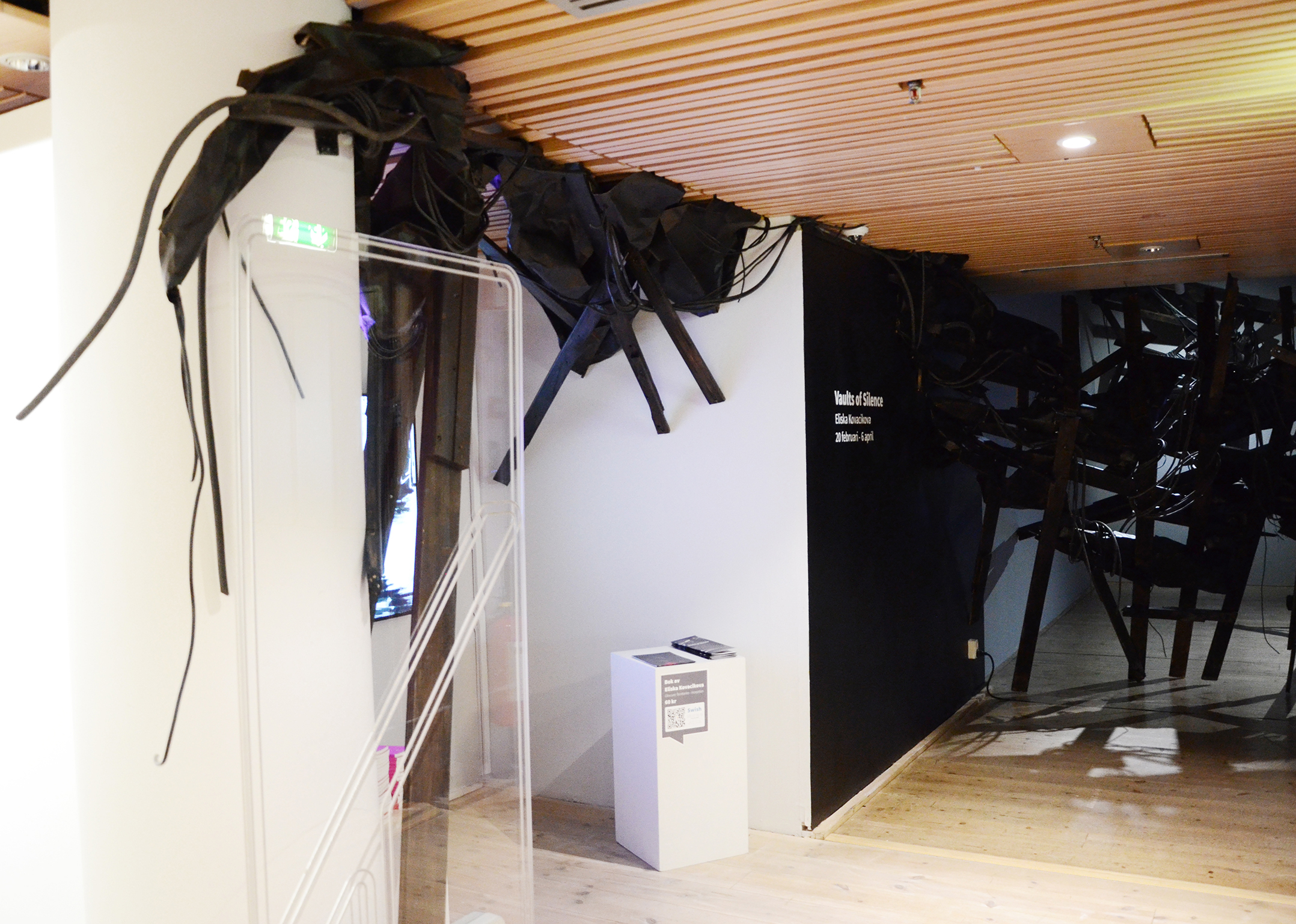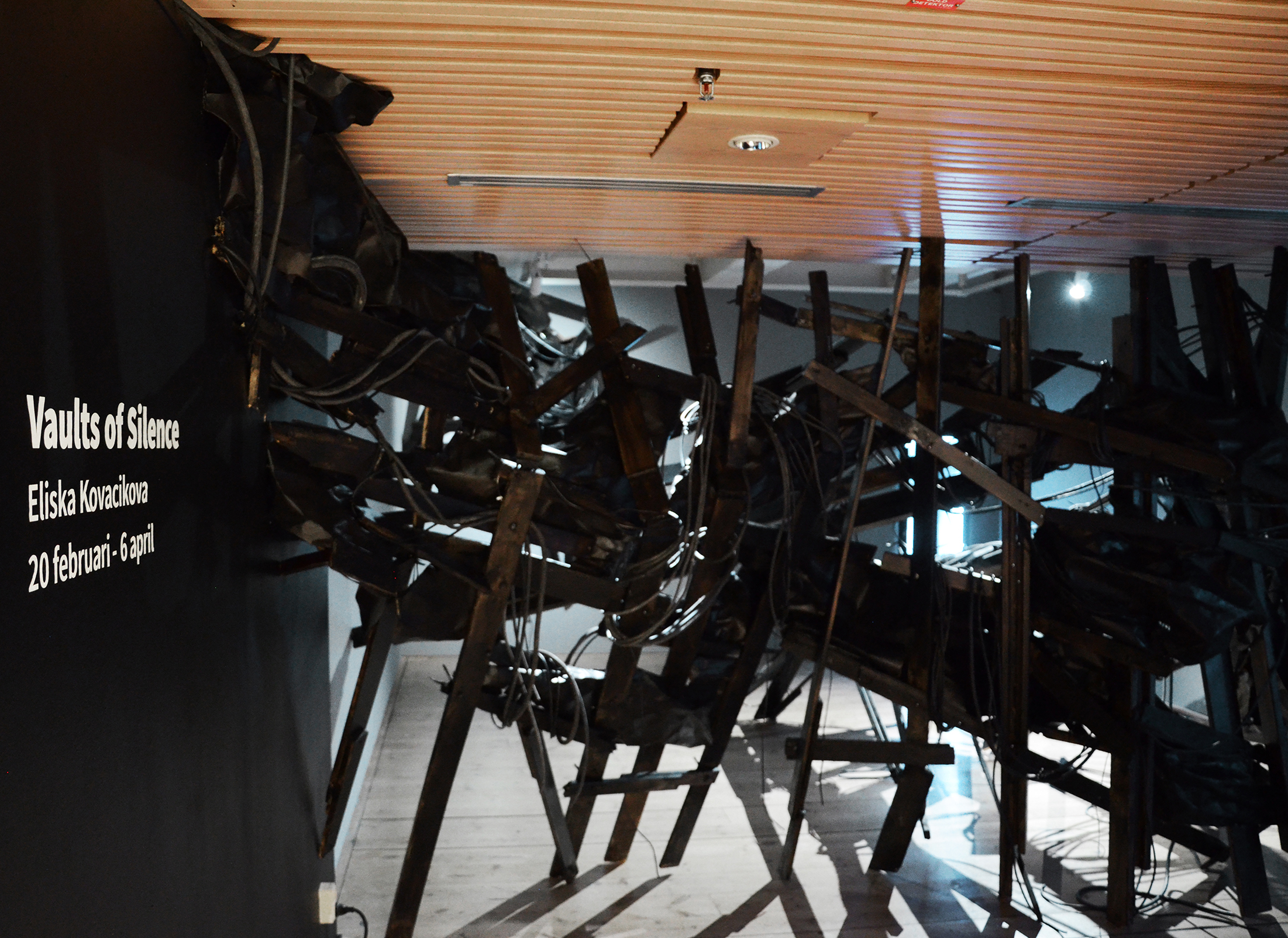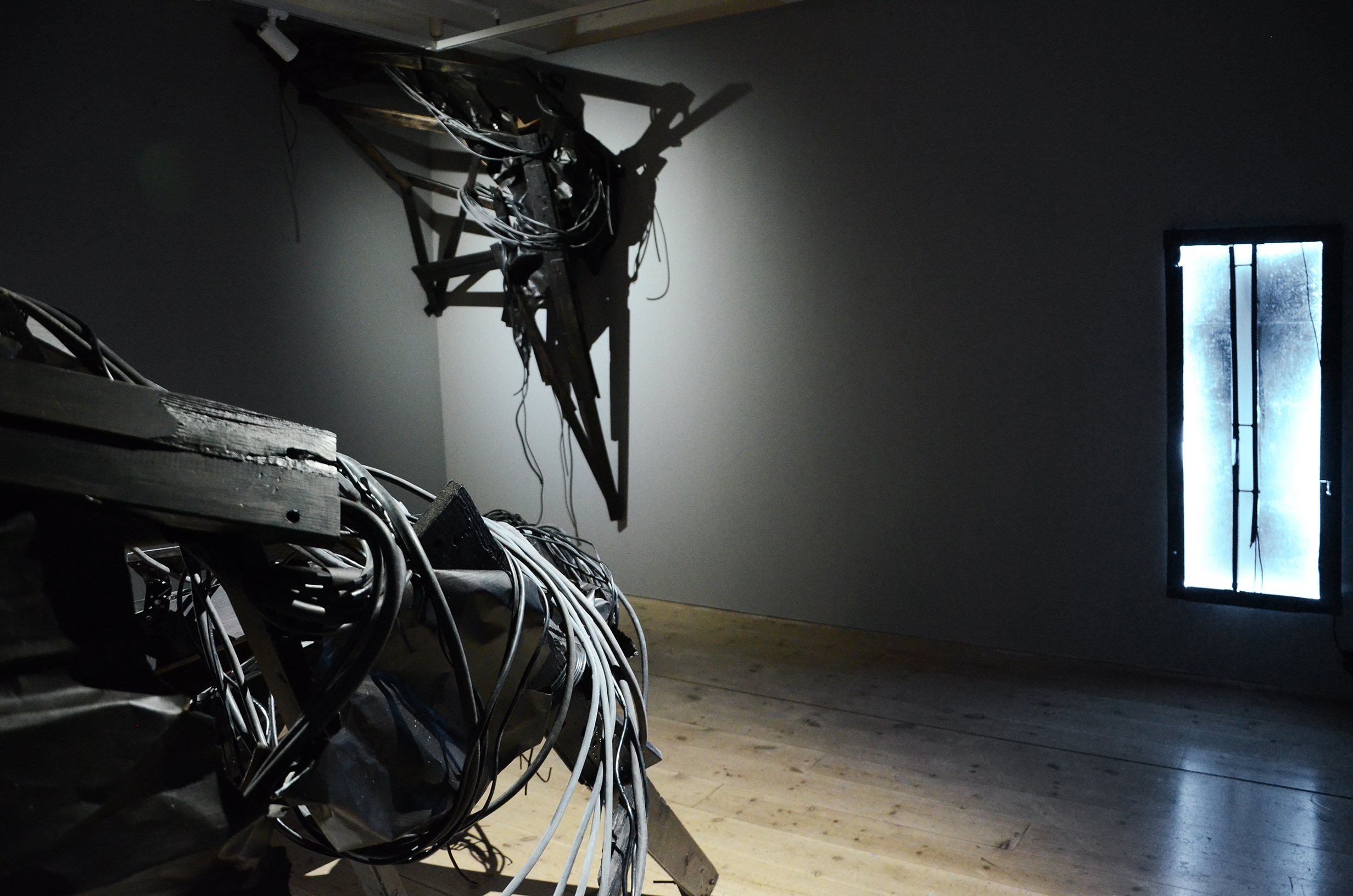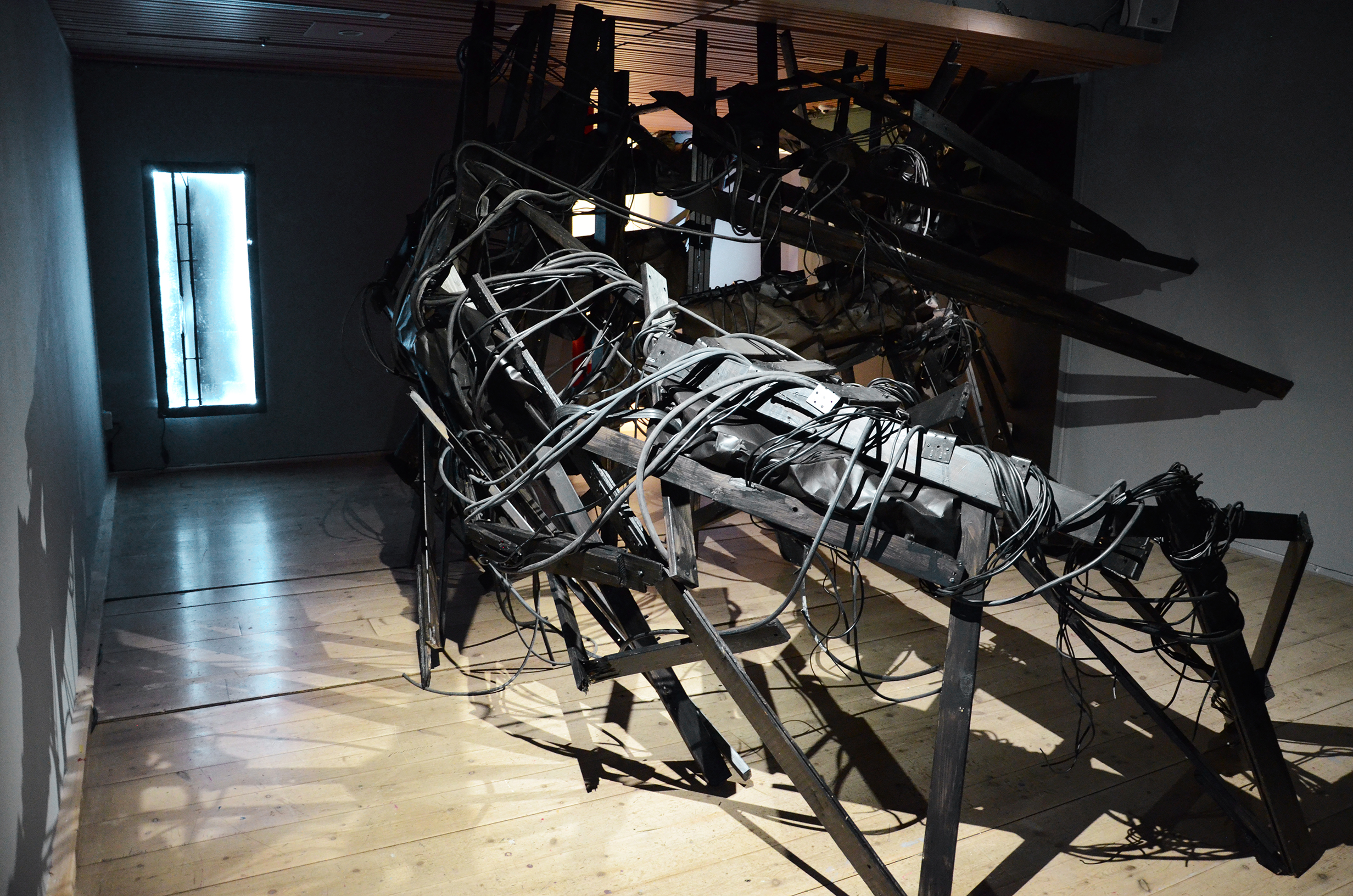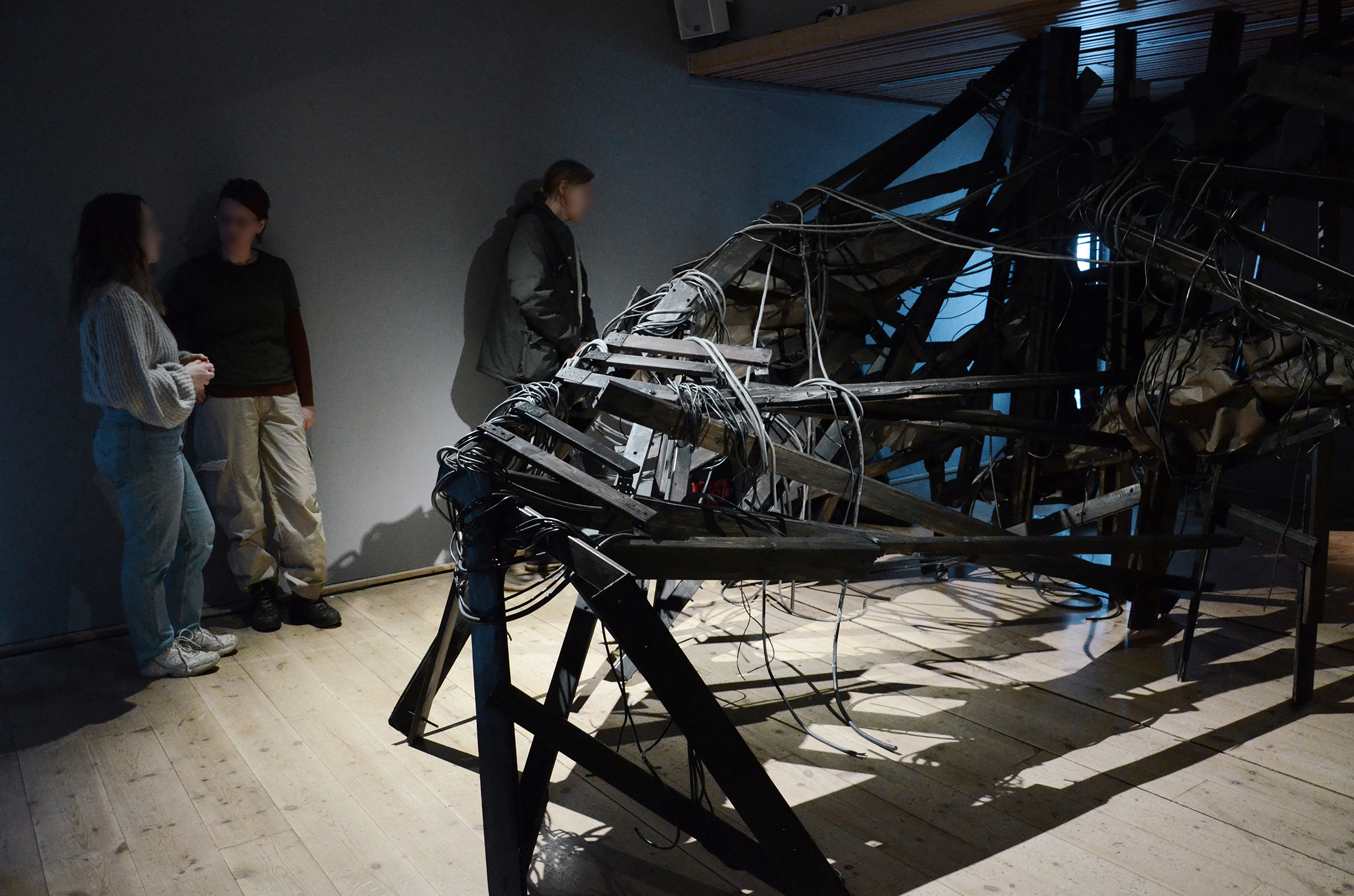
‘Vaults of Silence’ is a site-specific mixed-media solo-exhibition on view during 20 of February and 6 of April 2025 at Konstmuseet in Skövde, Sweden.
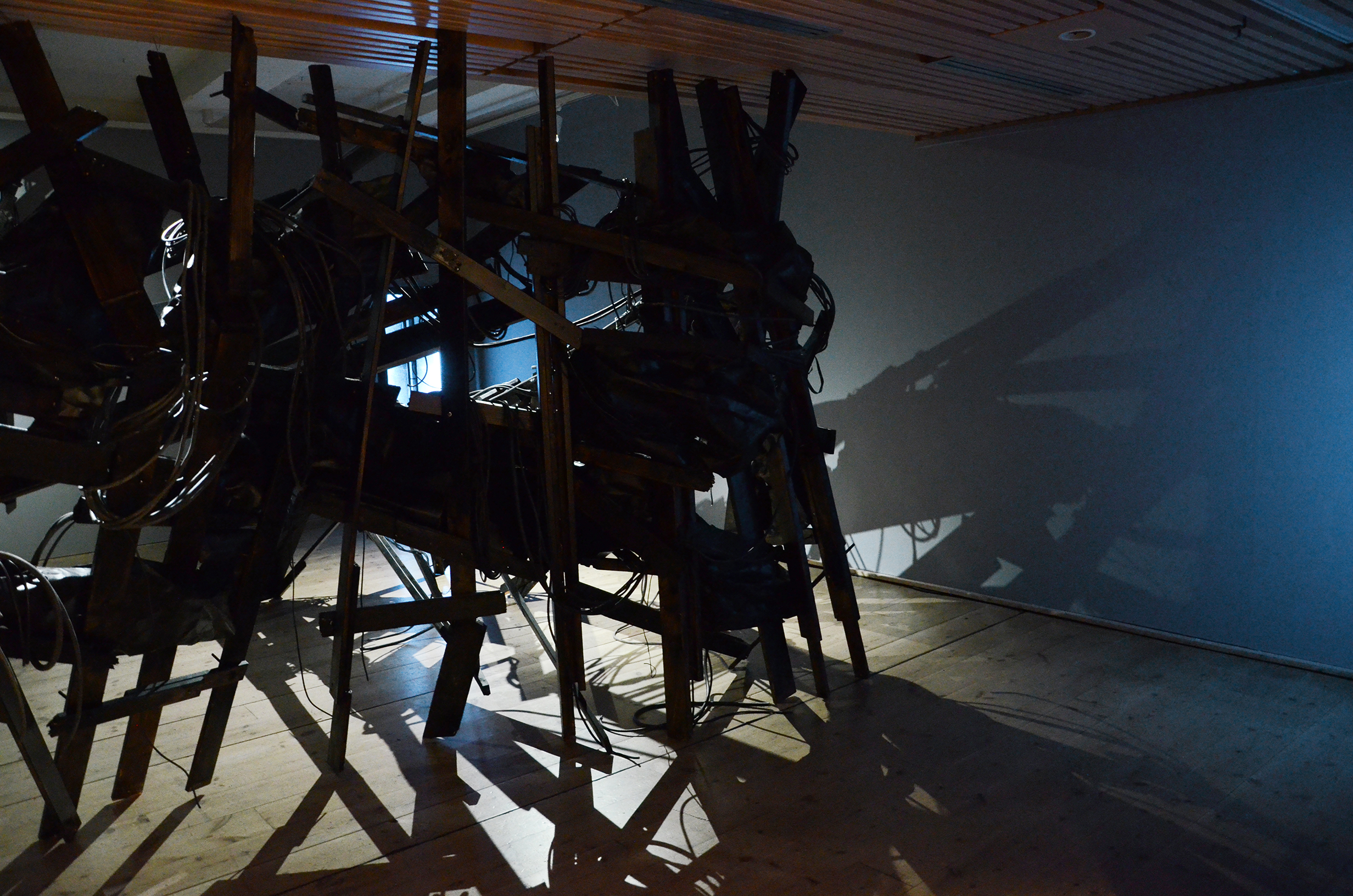
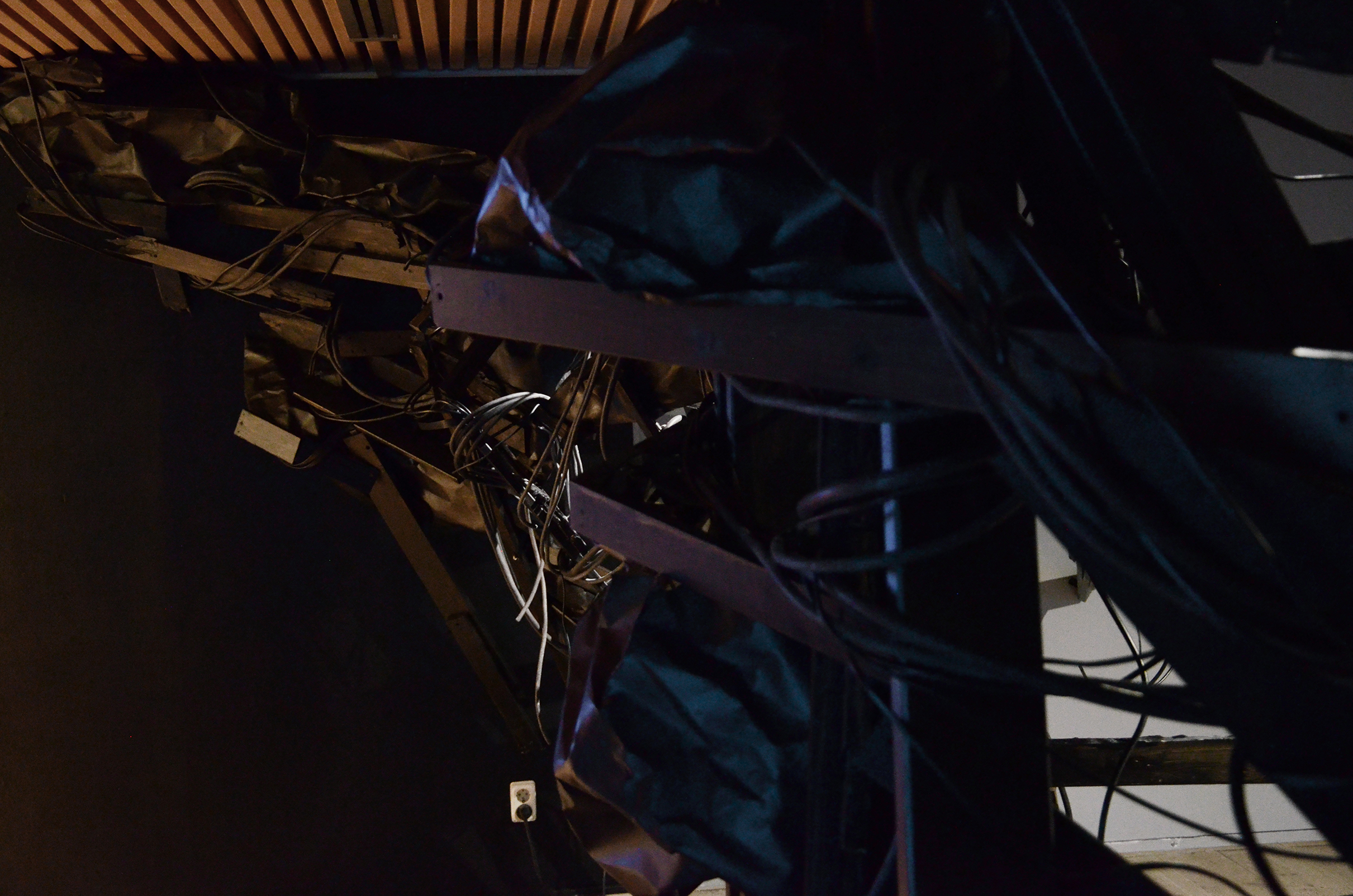
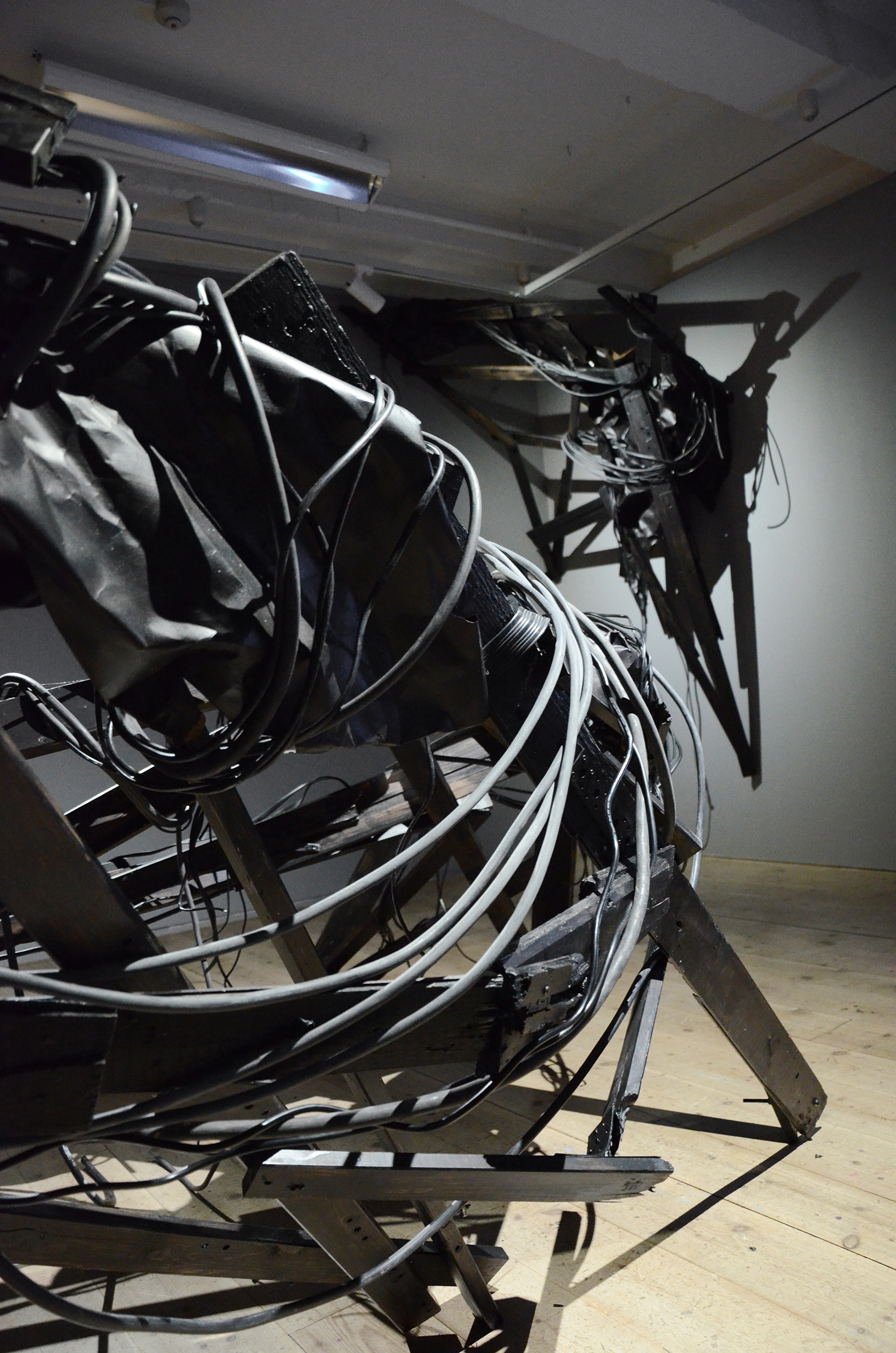
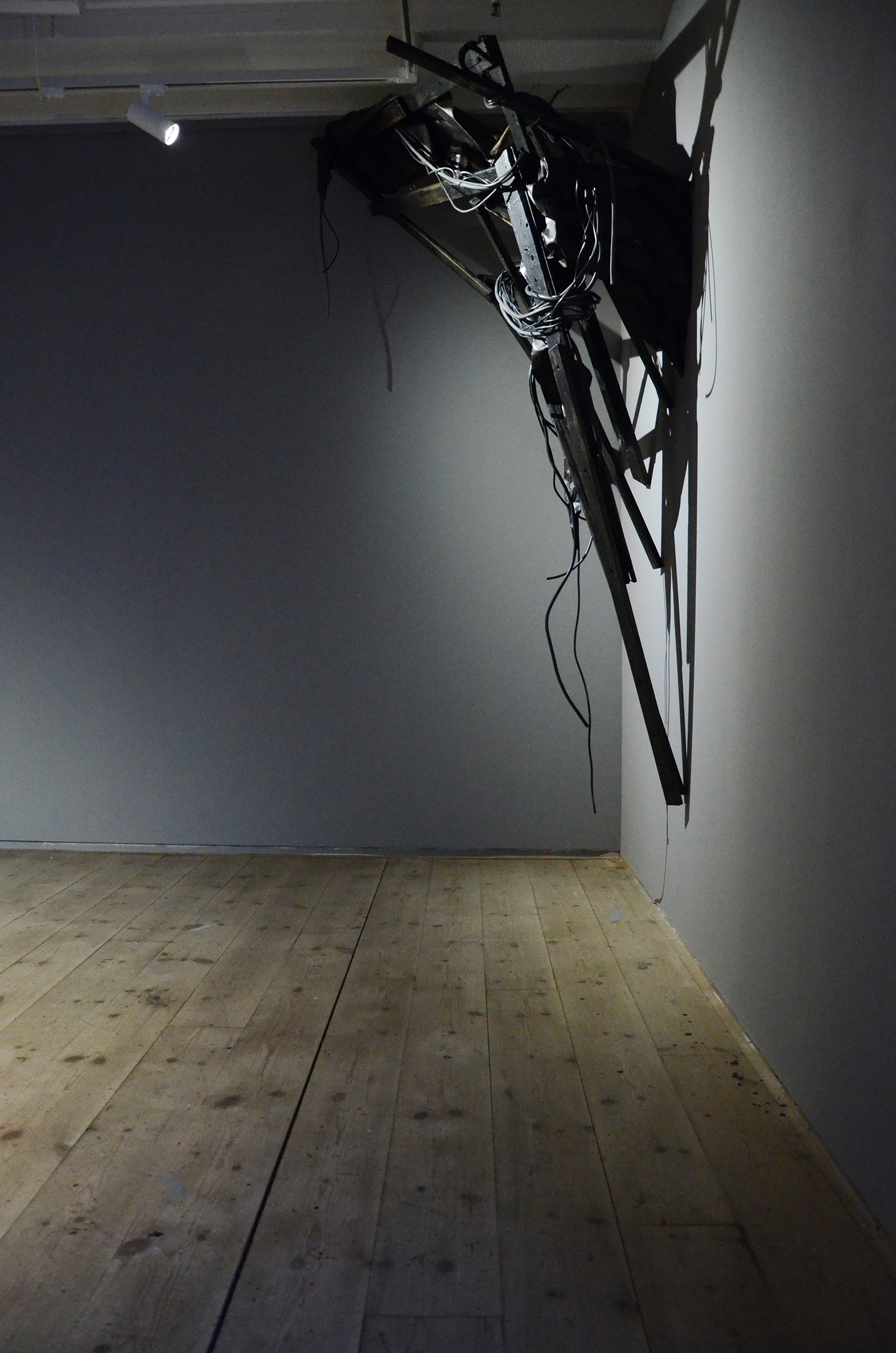
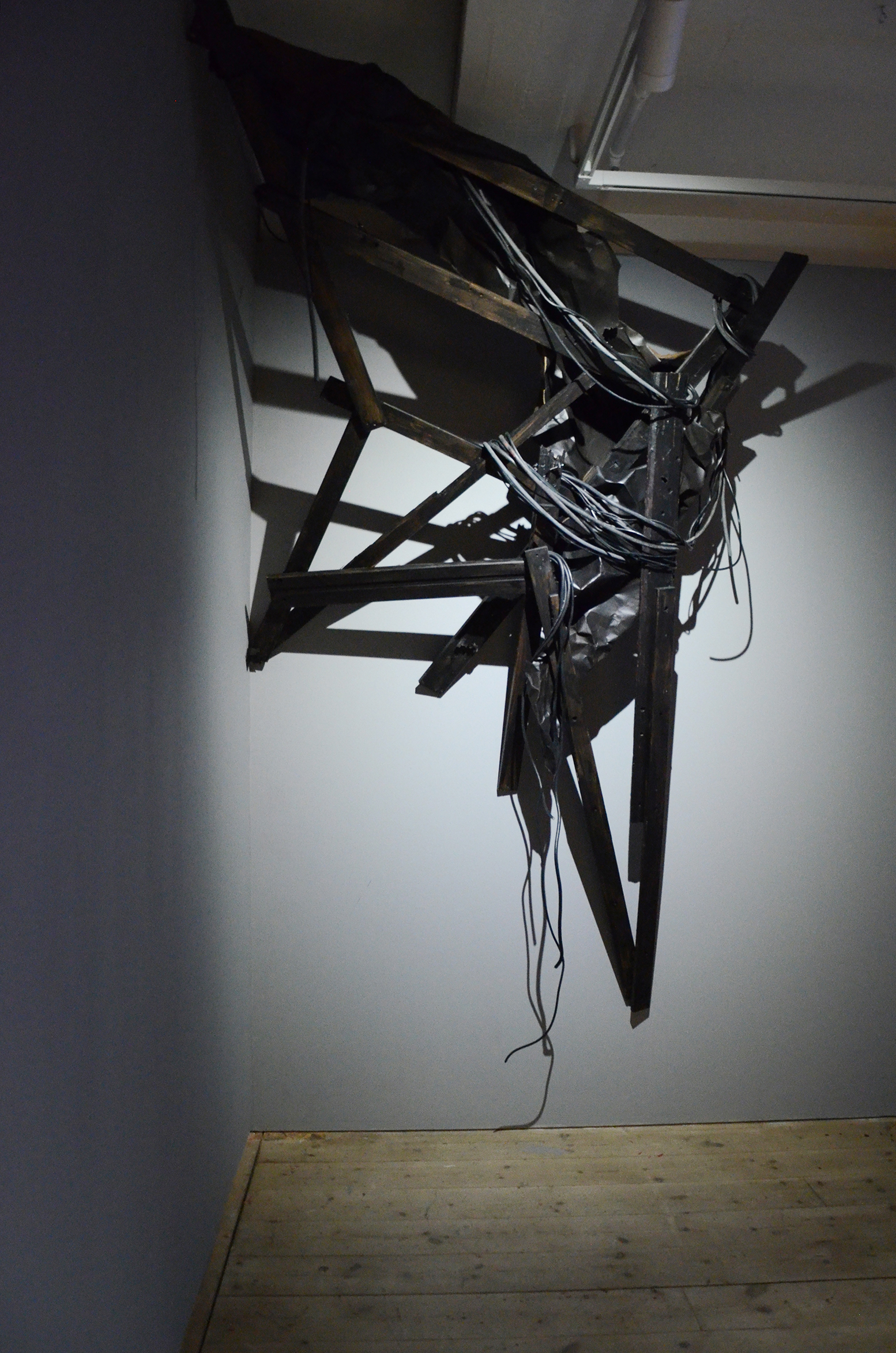
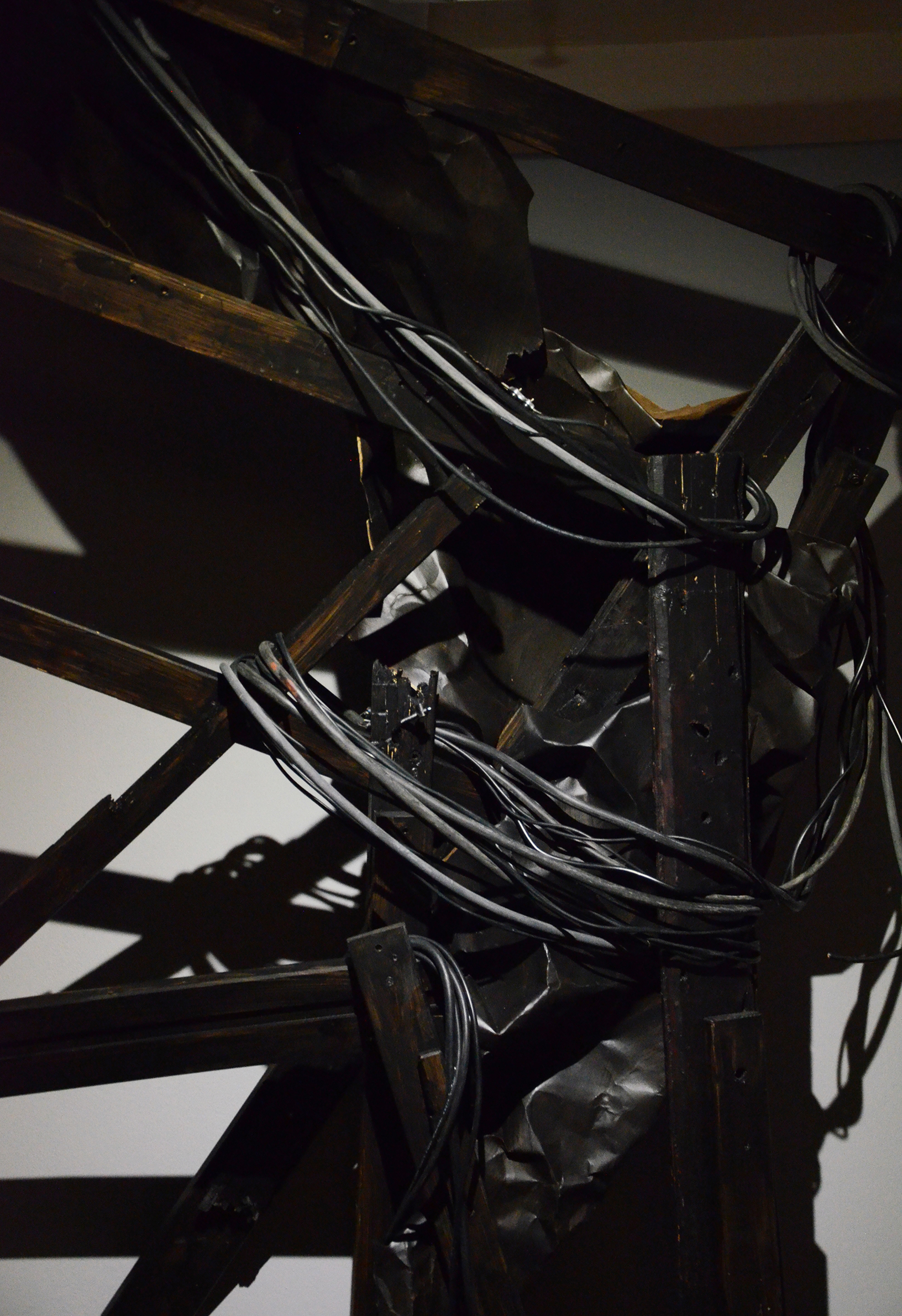
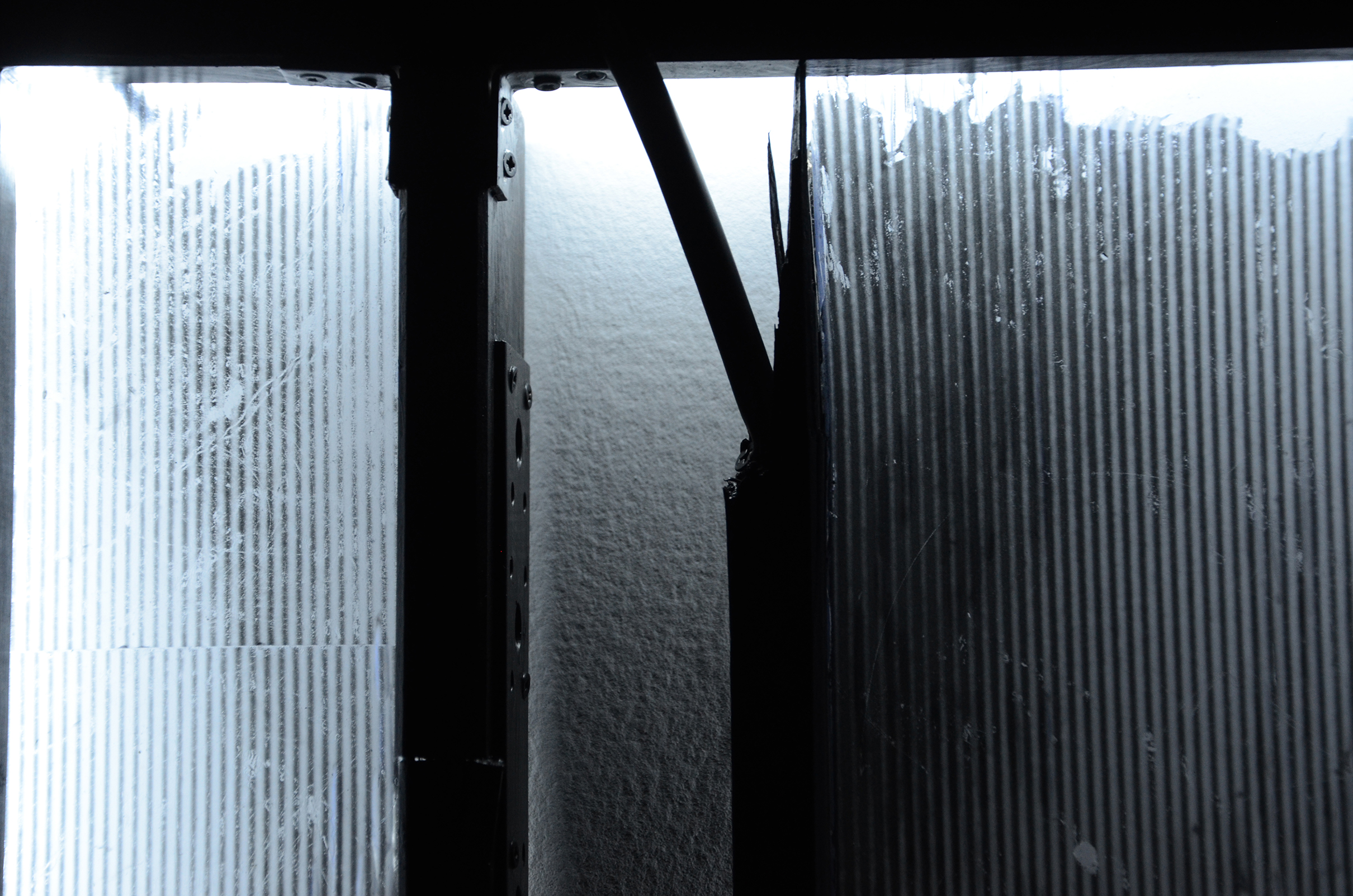
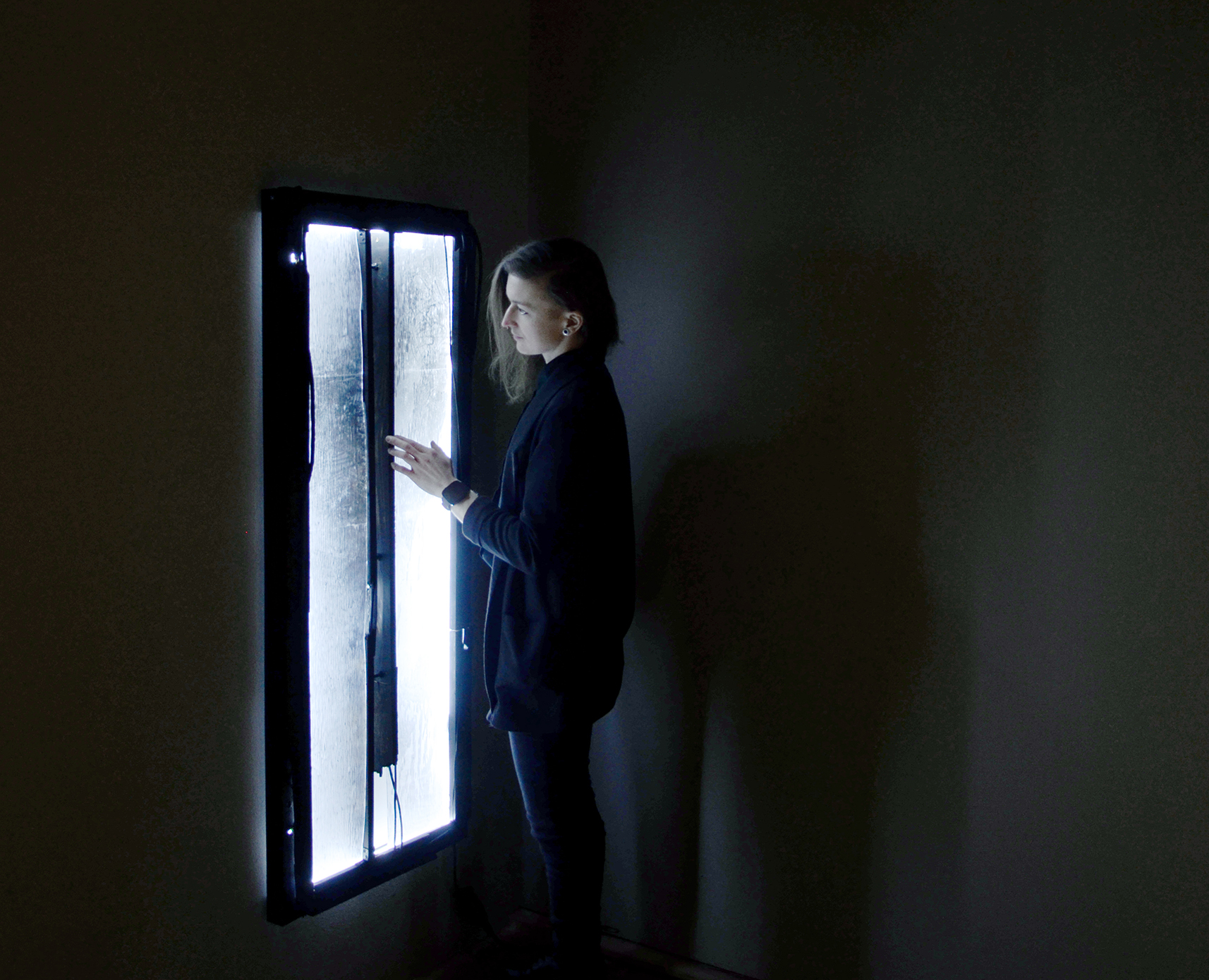
Material: recycled wood/metal/paper/old cables/sound/light reliefs.
This exhibition delves into the intricate relationship between the human body and the spaces it inhabits, specifically focusing on environments that impose physical limitations. The initial idea for this project emerged from Kovacikova’s fascination with protective-like subterranean spaces and their increasing relevance in the world. This exhibition aims to prompt a dialogue about what it means to exist in spaces that are both protective and oppressive, simultaneously serving as sanctuaries and constraints.
‘Vaults of Silence’ is focused on tracing, exploring, and investigating bunkers, shelters, and protective-like subterranean spaces through the lens of a corporeal experience. Spaces as such are fascinating due to their unique spatial placement and versatile purposes in relation to urban landscapes and society.
The complex and diverse world we live in is characterised by rapid technological advancement, globalisation, increasing interconnectedness as well as rapid climate change, human overpopulation and continuous threat of war conflicts locally as well as globally including war and weapon technology. All these aspects urge us to rethink the fundamental meaning of space and spatiality, what is the dimension of living space and what it will be, or perhaps, what it should be in the future. The meaning of freedom can easily become variable and the notion of limitation or restriction becomes unavoidably prominent.
The conceptual background of this project emerged from the value of 0.75, which precisely refers to the calculated area allocated for one person in shelters or bunkers in Sweden—0.75 square metres per individual. This figure becomes a poignant symbol of the tension between physical confinement and personal space, inviting reflection on the implications of such restriction. The prominent focus tackles the meaning of compression and introspection, drawing attention to how confined environments affect the body’s movements, emotions, and perception of freedom.
The main objective of the artist’s process is to deconstruct the relation between a body and a limited space, study it from several theoretical perspectives, and use them in the formal and conceptual development of the exhibition. The principal aim is to build a strong correlation between the exposure to a confined space and the experience of the exhibited installation.
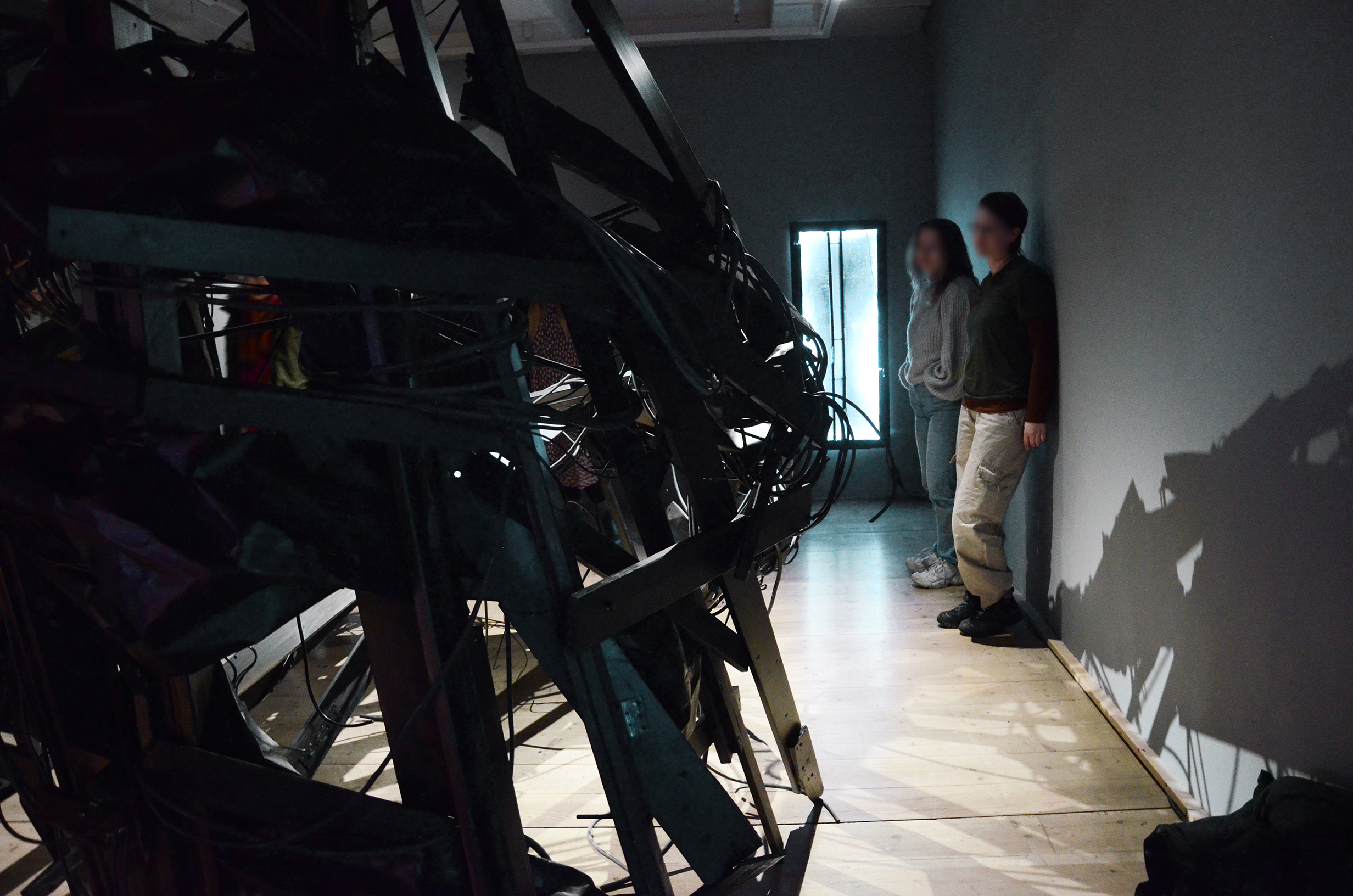
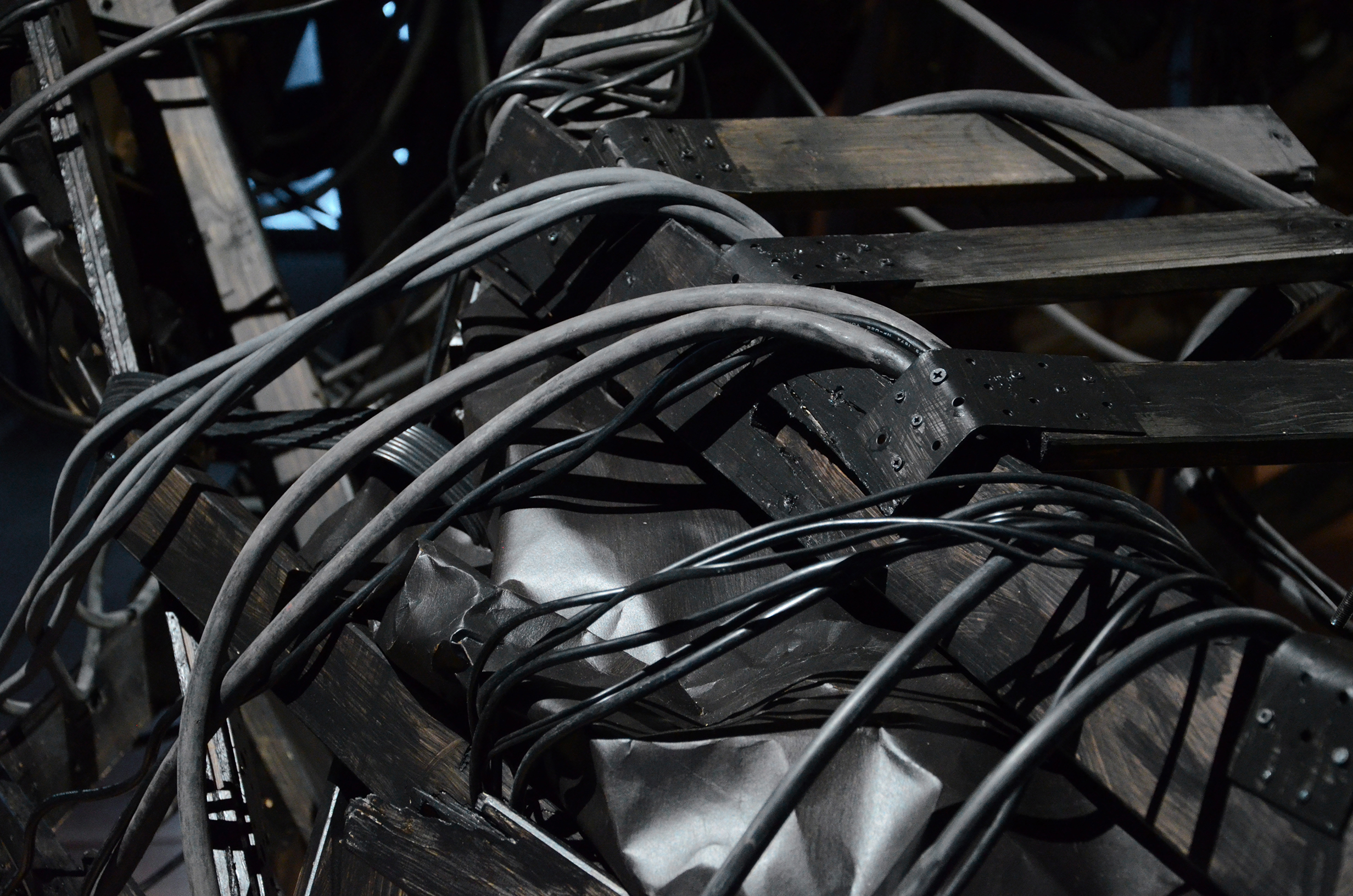
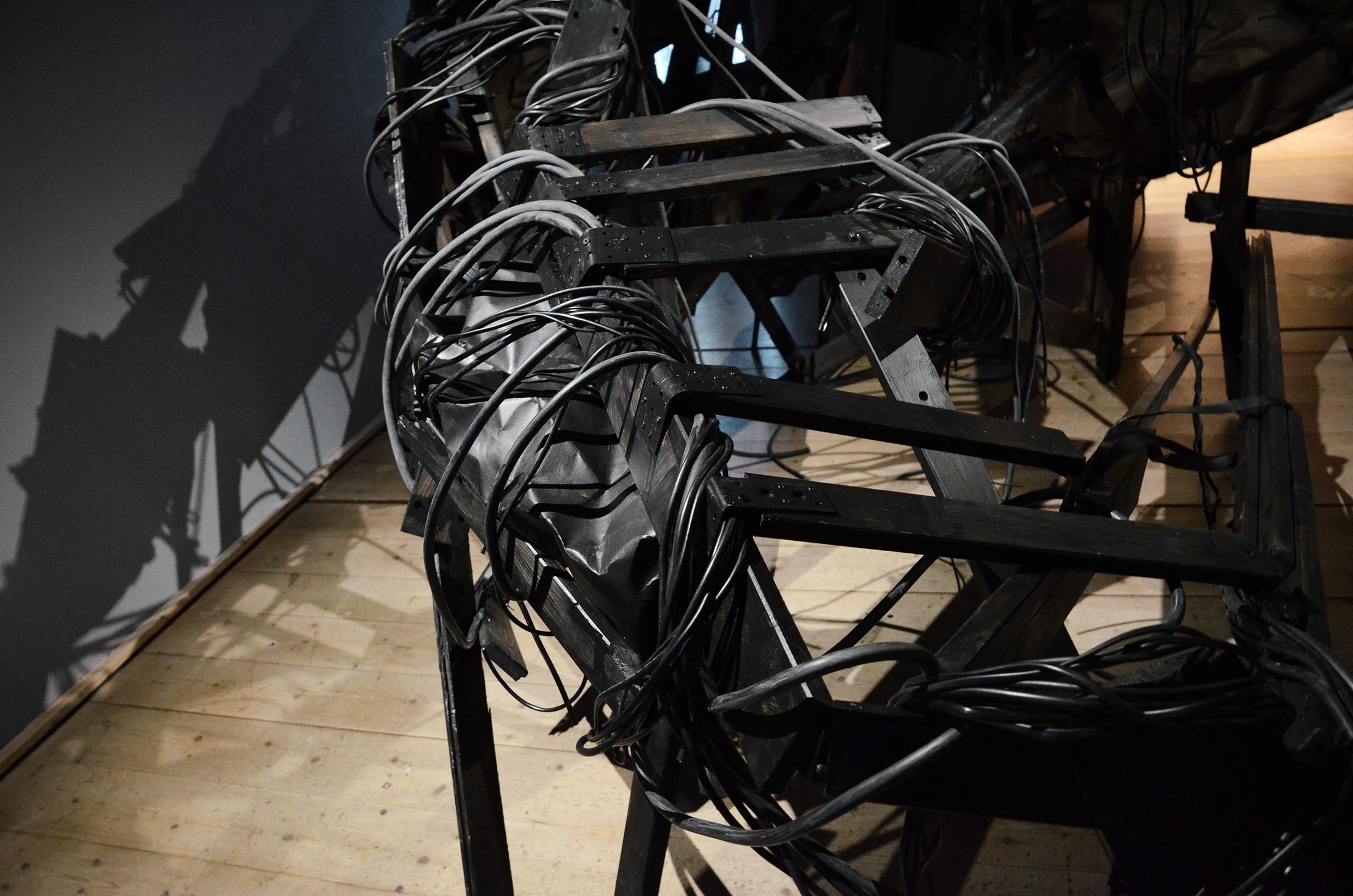
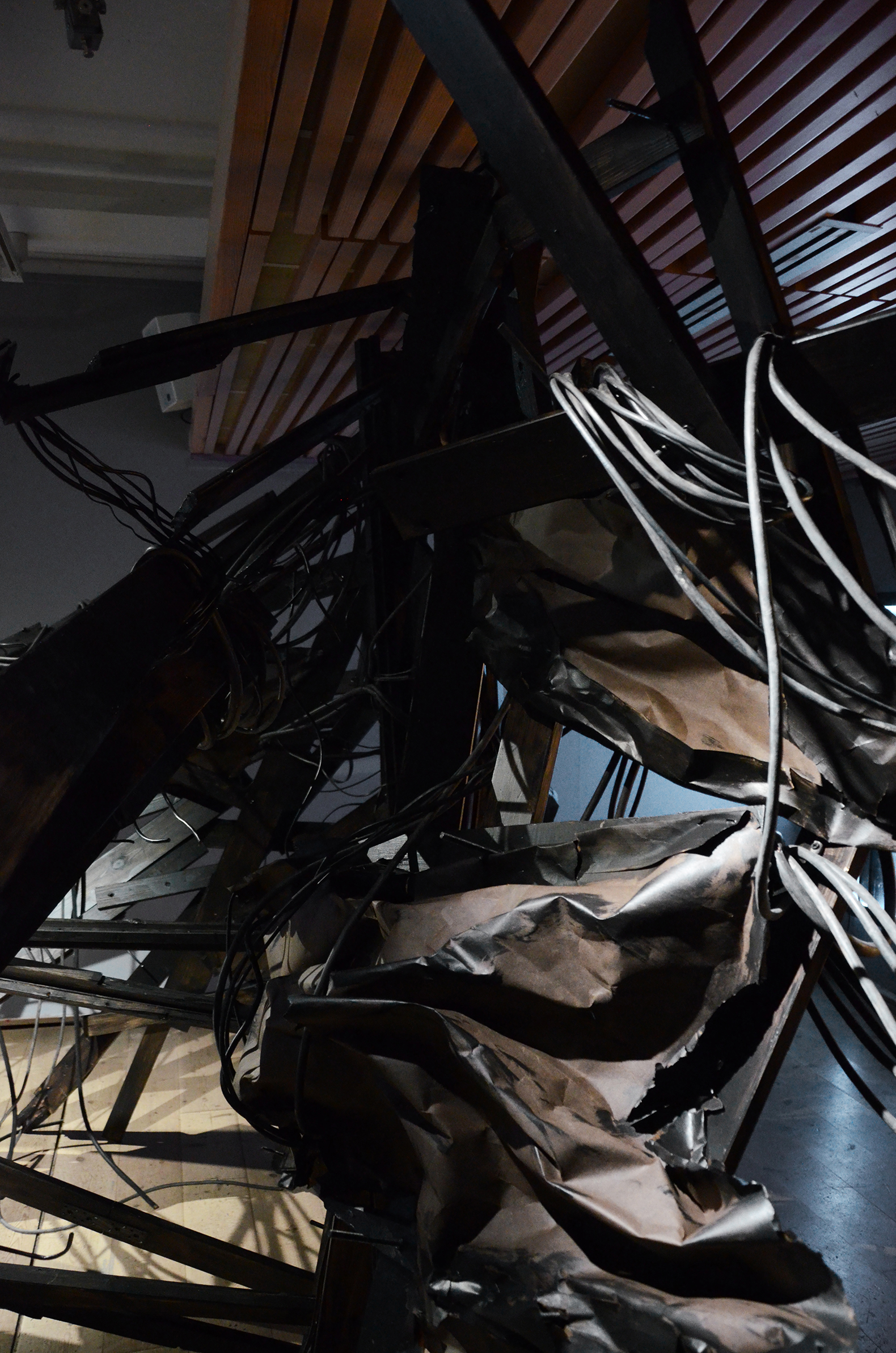
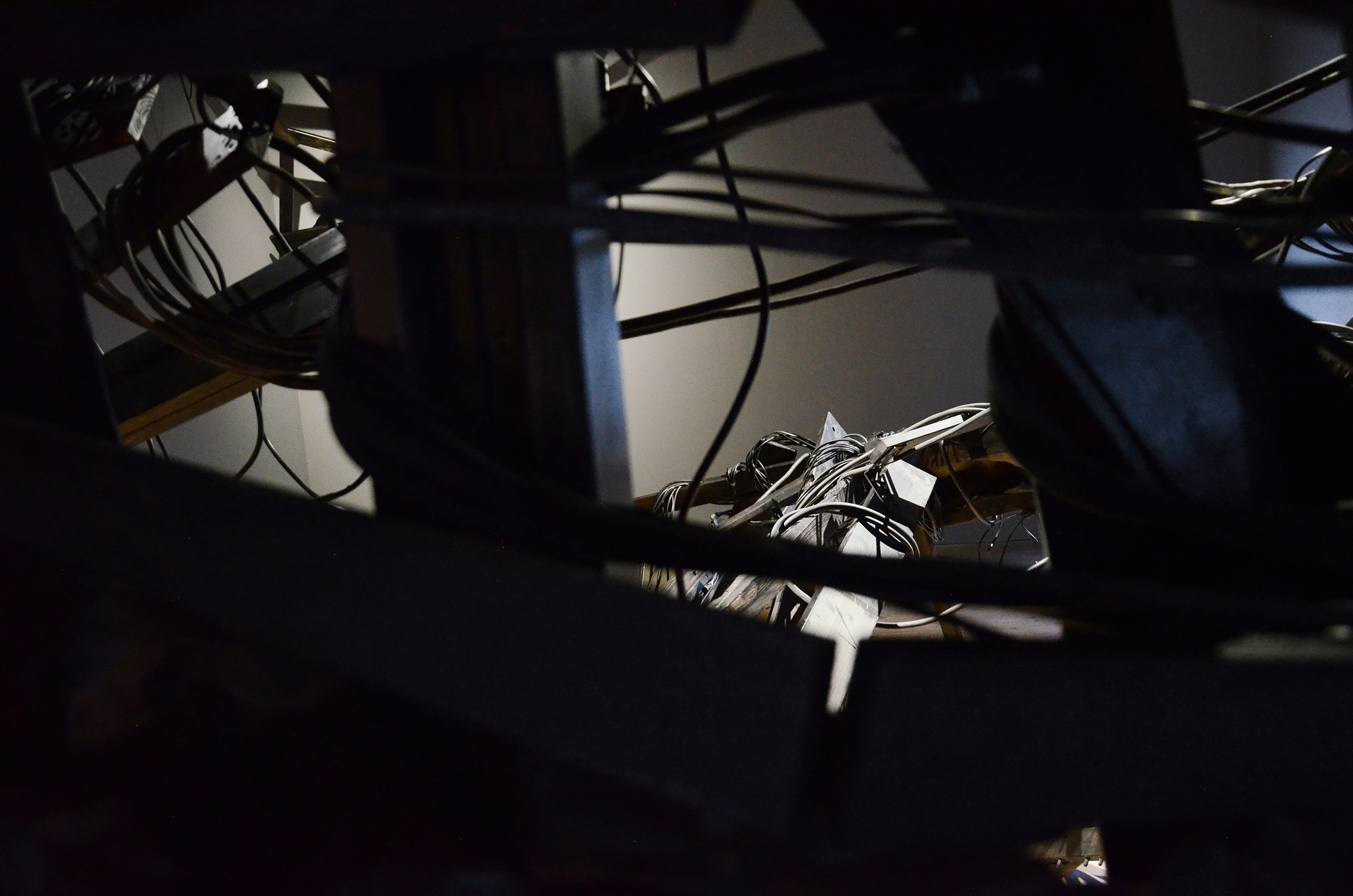
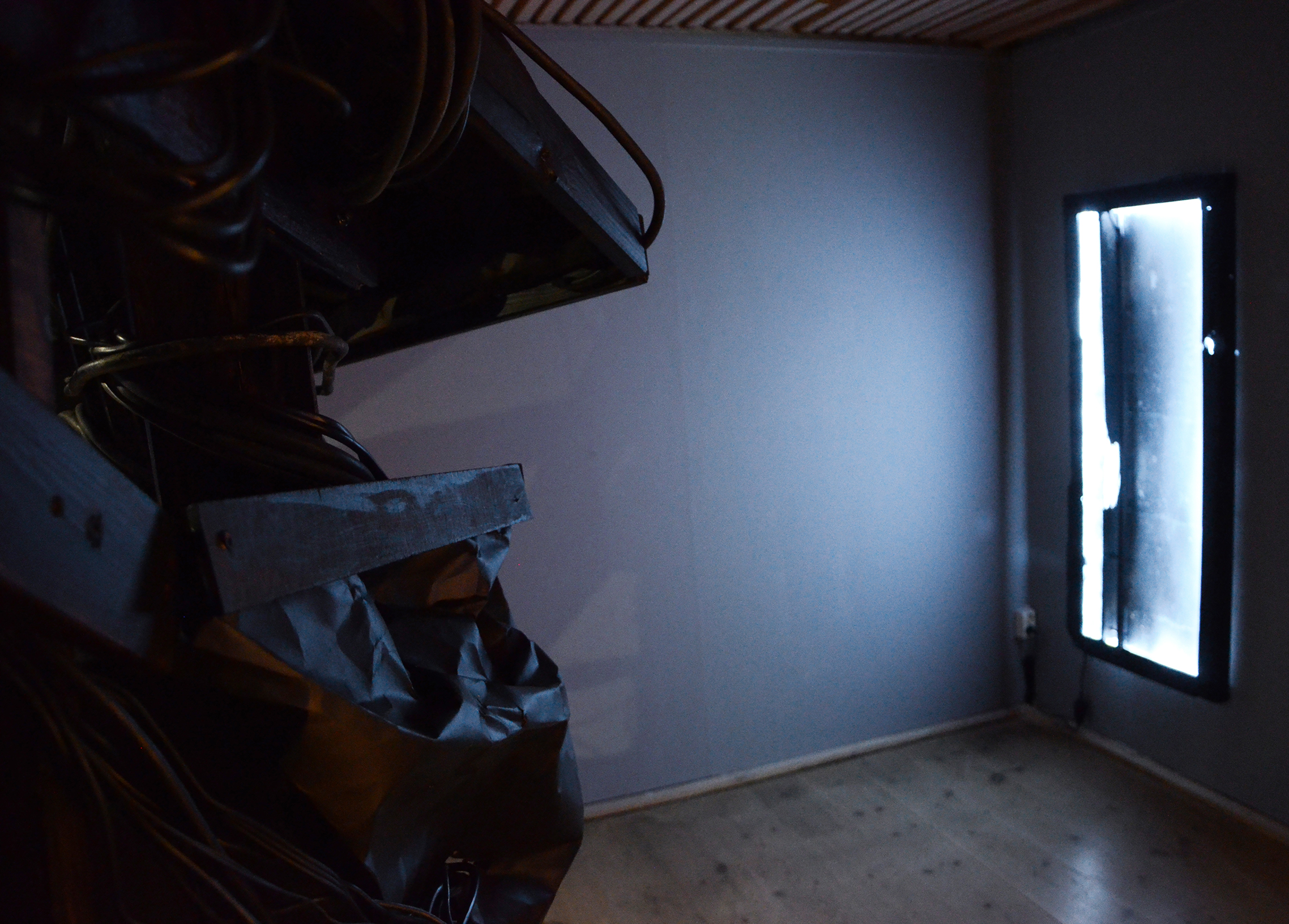
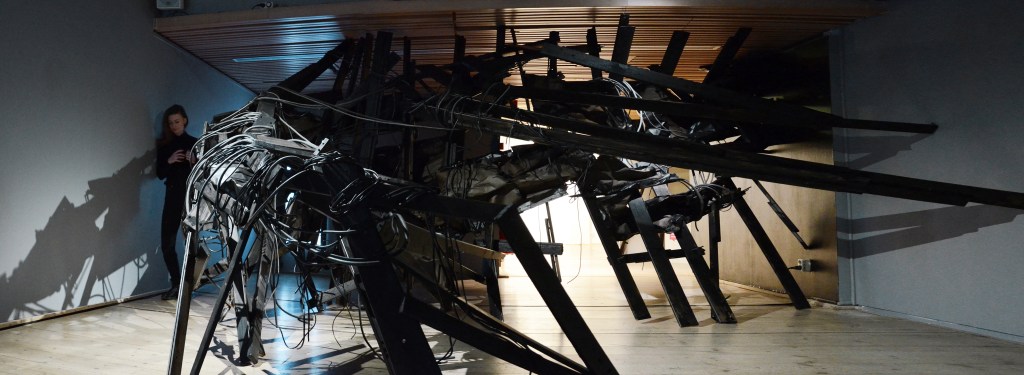
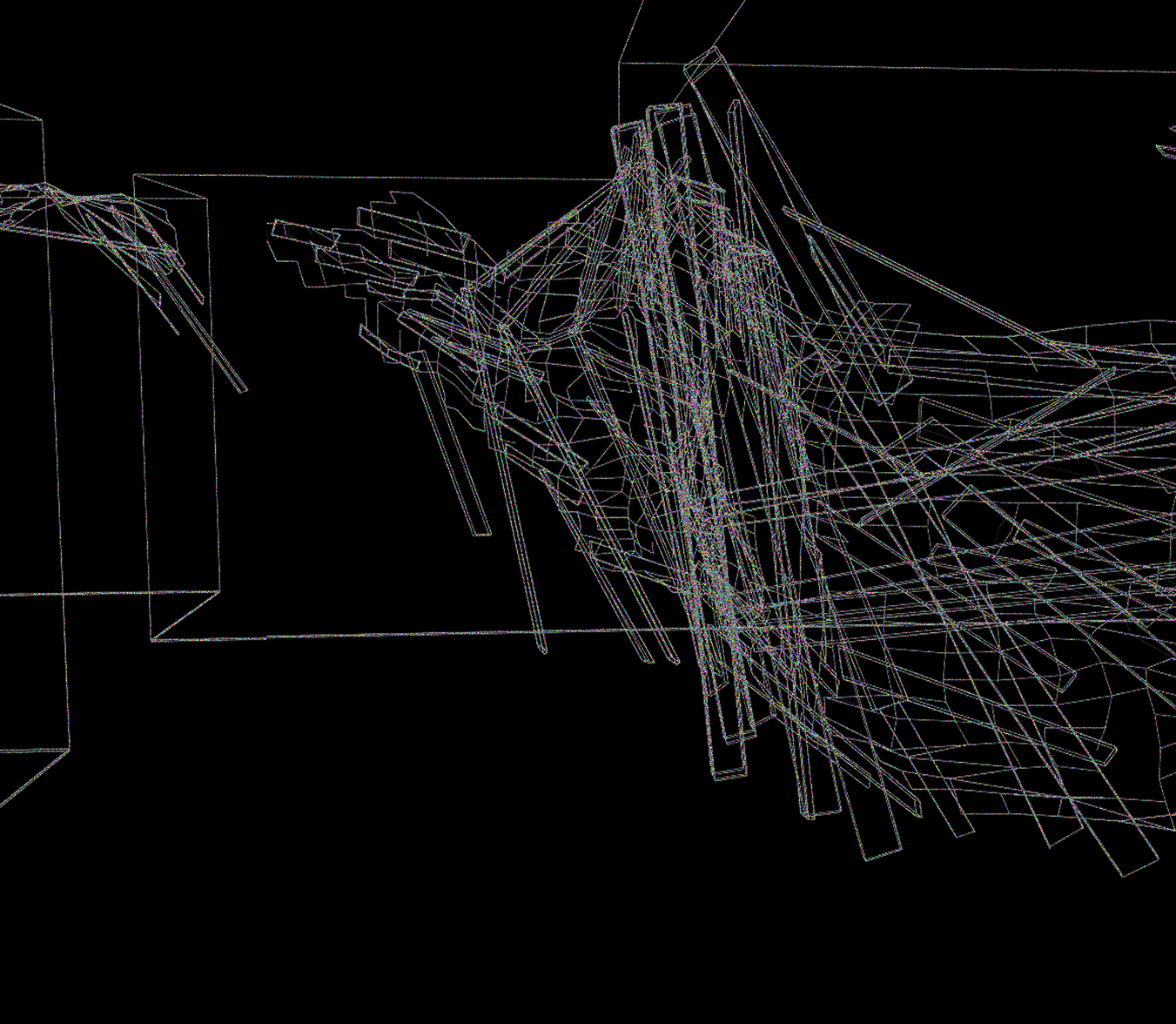
Using recycled materials such as wooden planks and electric cable, the installation form consists of deformed surface fragments of the human body, bound together, creating a structure that interacts with the shape of the exhibition room with its own energy. It dynamically moves in the air, appears and disappears, dominates and invades the gallery walls at the same time. It resembles an abstract body in the moment of transformation – highlighting its shape-changing in becoming nothing from something, and vice versa.
In light of these reflections, this exhibition becomes an experimental interplay where the attributes of the exhibition space are set in relation to bunkers and their metaphorical interpretations. Combined with sound, it can be viewed as a fragment of a closed space, a shelter, a remnant of what has occurred or what may come in the future.